
OKTA
Architecting Unified Identity Security
Role
Principal Designer
Timeline
3 months
Strategic Pillar
Enterprise Platform Trust
System Layer
Horizontal Interaction Framework
Partners
Principal Security Architect
Principal Engineering Architect
PM Director
// 01. PROJECT BRIEF
Evolving Okta From Risk Reporting to Active Remediation
The Enterprise Intervention
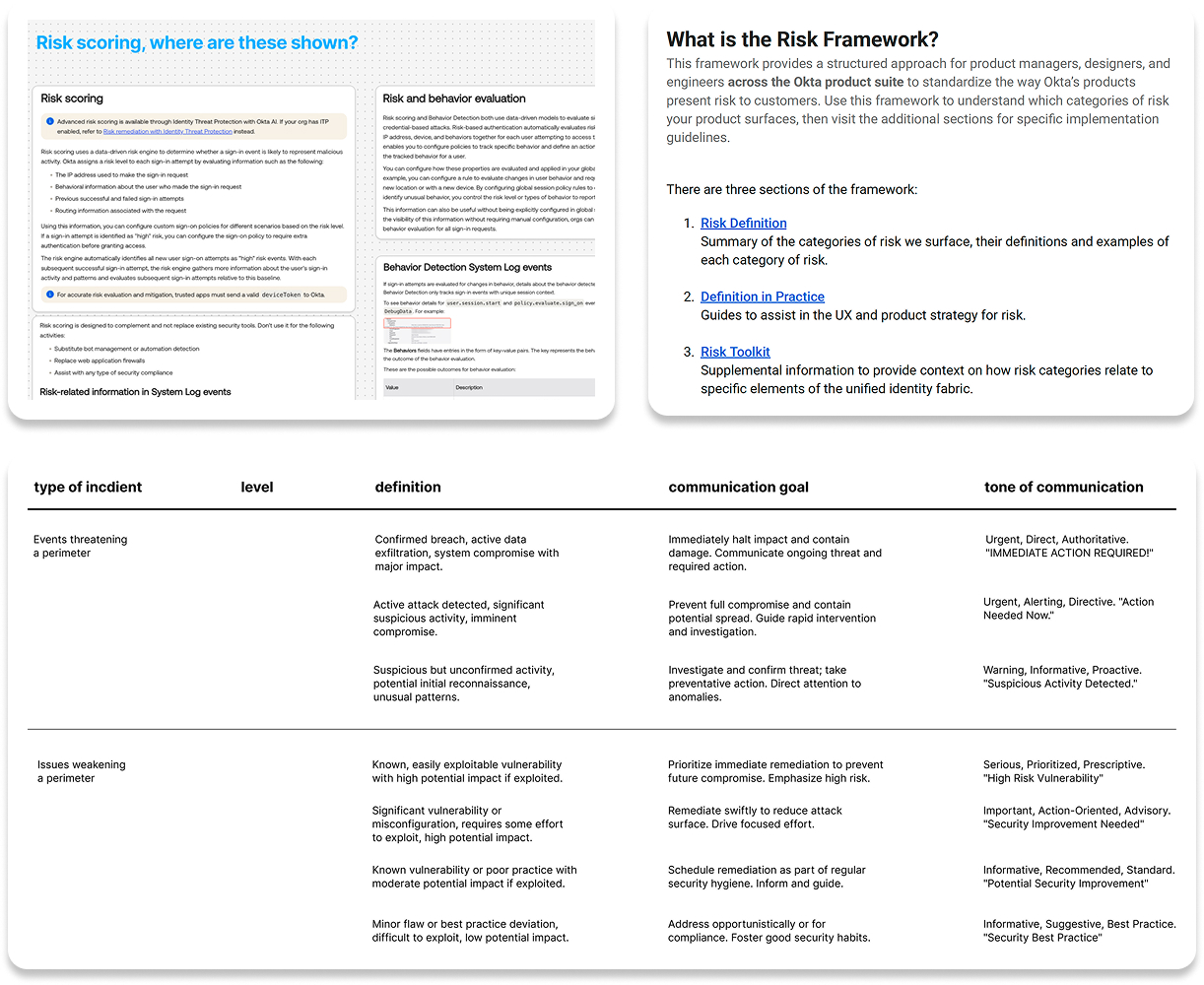
I co-led a core cross-functional architecture layer to address highly siloed platform communication. Our strategy was divided into two systemic phases: standardizing a unified backend threat taxonomy (The Risk Framework) and developing automated inline remediation UI components (The Guardrails Experience).
The Solution
We systematically transitioned complex backend security logic out of static documentation and retrofitted it into the active administrative experience.
The Measured Outcome
This systemic intervention successfully evolved the platform from a passive monitoring engine into an active, automated resolution ecosystem.
// 02. OPERATIONAL ARCHITECTURE
Building a Unified Risk Schema & Platform Taxonomy
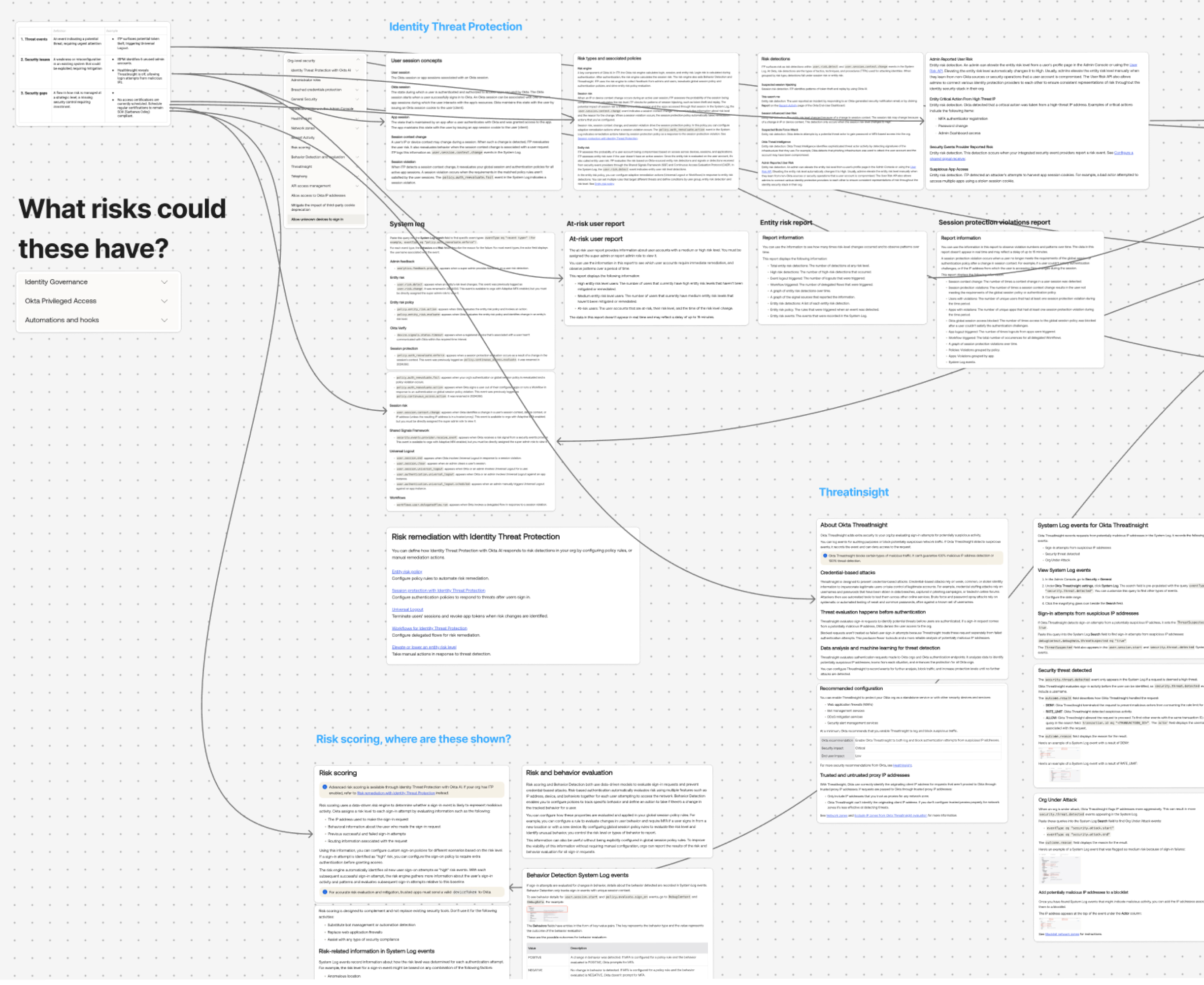
To build a single source of truth for the platform, my first task was operational, not visual. I initiated a comprehensive product audit across every major platform silo to map how data anomalies were evaluated and exposed to users. Working directly with engineering leadership, we established a centralized logic model that maps raw backend threat data across five clear platform stages: Orient, Learn, Act, and Opyimize. This architectural alignment allowed us to transform arbitrary risk scores into a highly predictable, platform-wide taxonomy.
// 03. PRODUCT CRAFT
The Guardrails Experience: Navigating Complex Horizontal Journeys
Designing for the High-Domain Actor
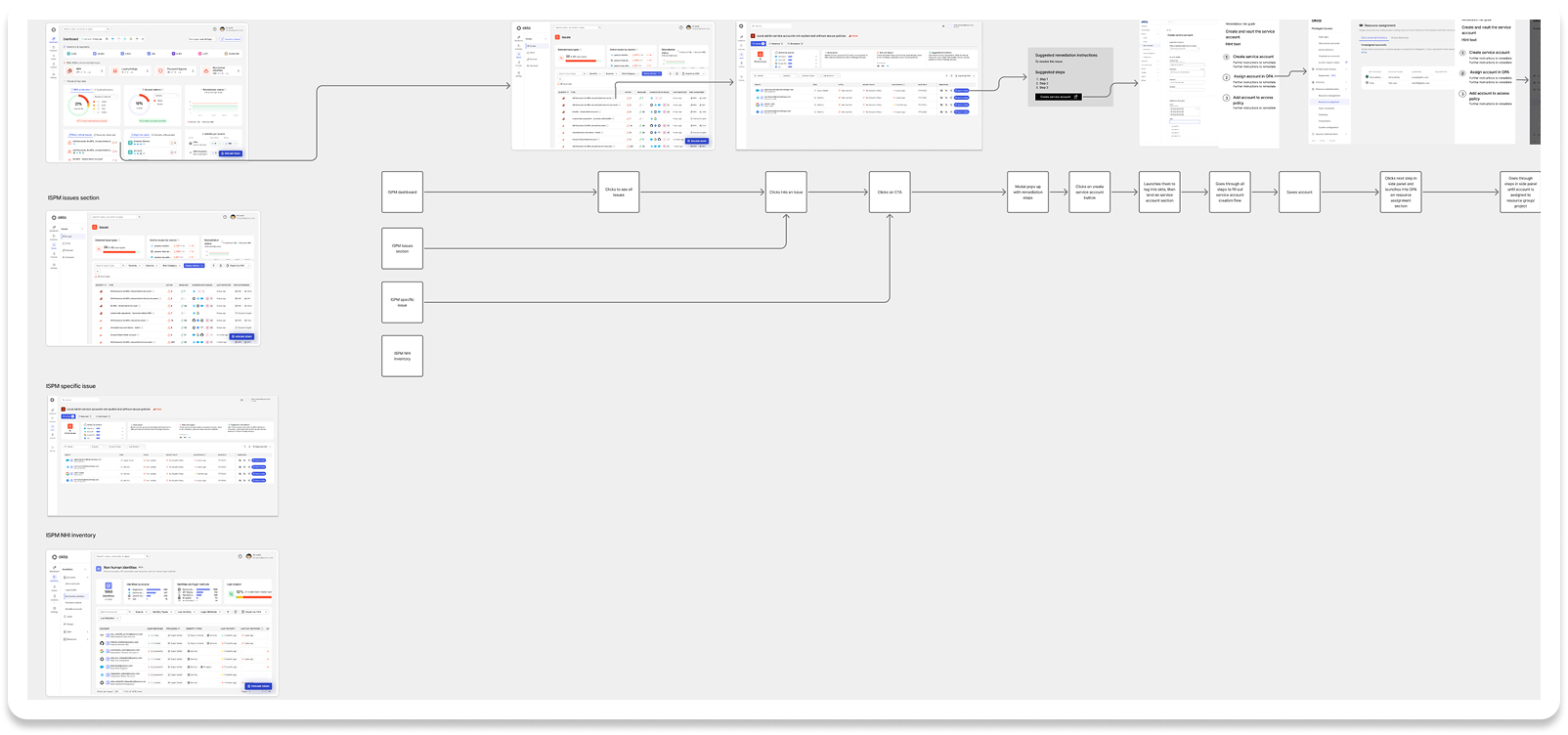
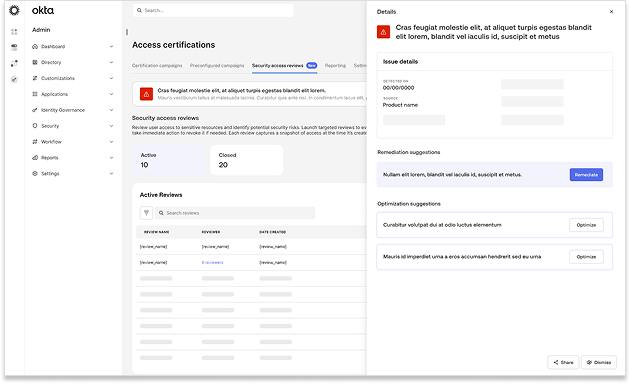
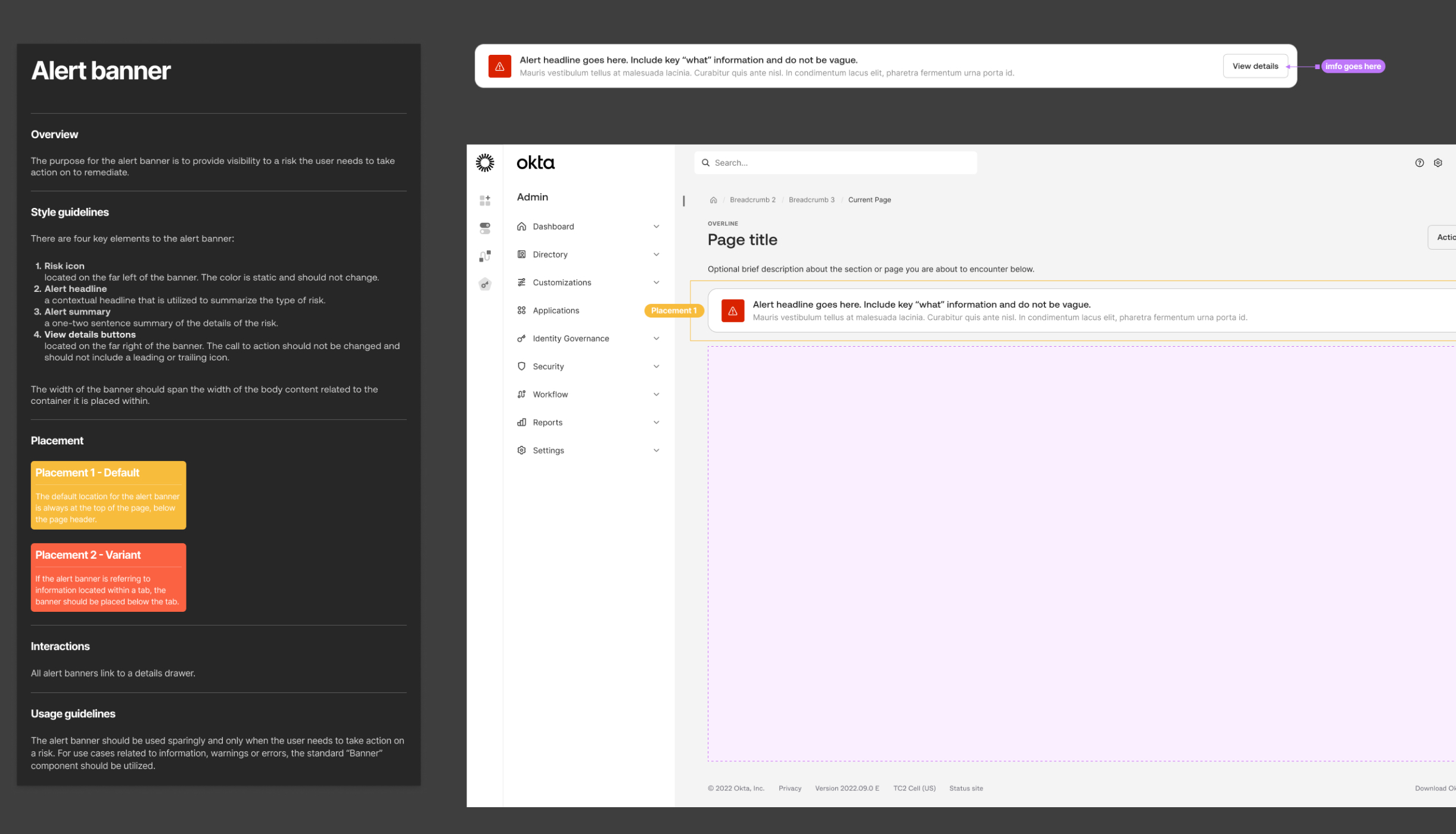
With the backend logic unified, I engineered the consumer-facing interface layer: The Guardrails Experience. Security administrators do not operate in a vacuum; they manage high-stress environments where a single misconfigured policy can lock out thousands of enterprise users. The interface was designed using strict typographic hierarchies and high-contrast alert states to ensure system status visibility is absolute. I mapped horizontal user journeys that unified disparate platform capabilities into cohesive inline blocks, ensuring administrators can view an anomaly, evaluate its blast radius, and execute a fix without context-switching.
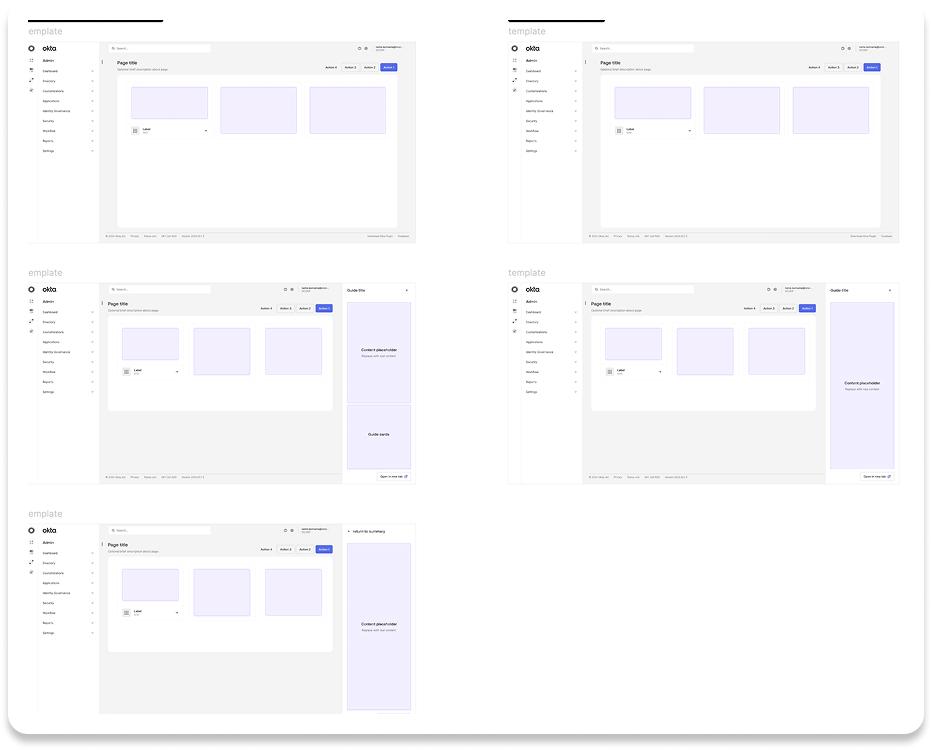
Intelligent Remediation Workflows
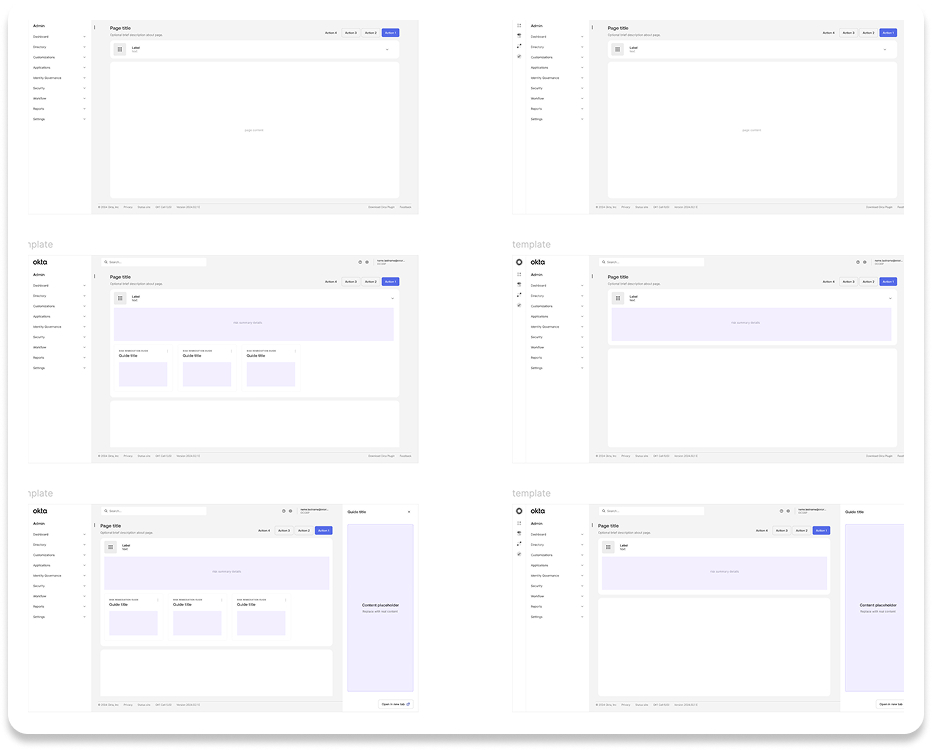
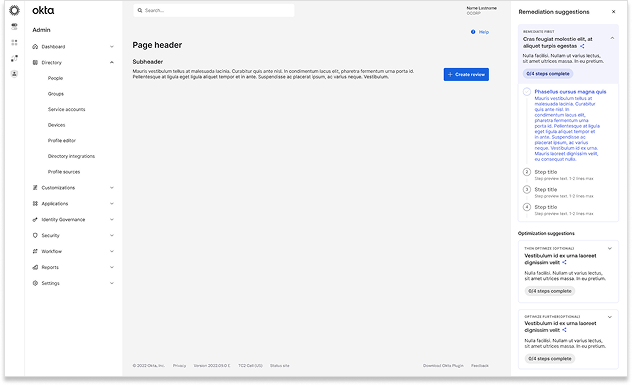
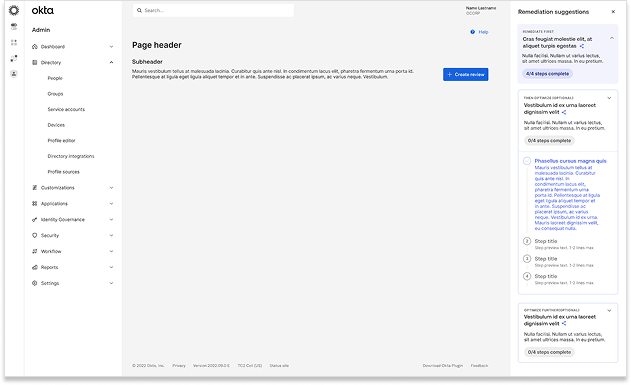
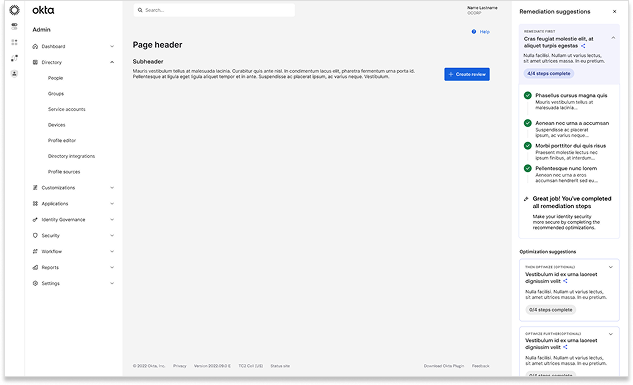
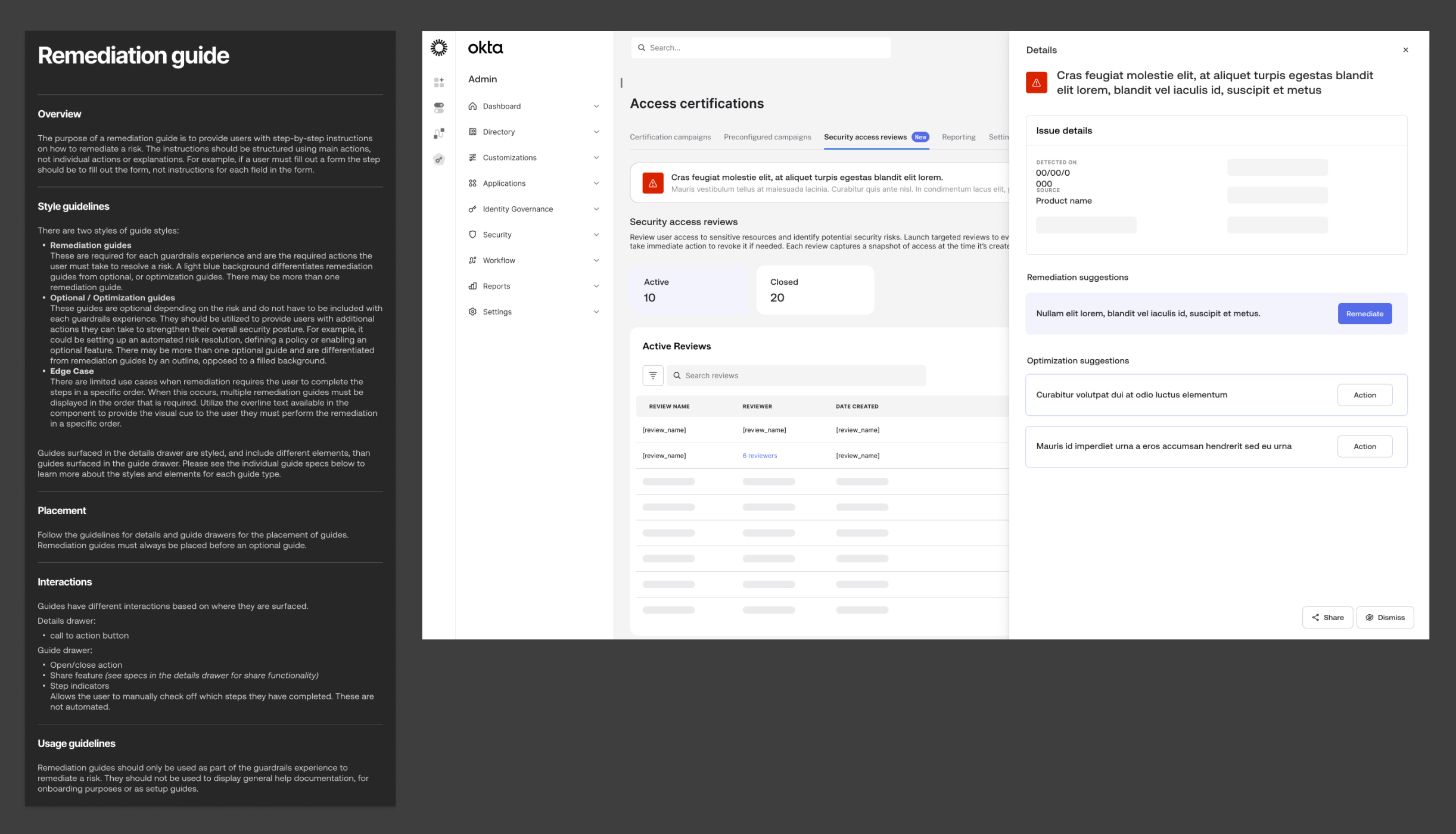
Instead of forcing administrators to parse external support articles to resolve a threat, I designed an Intelligent Remediation Guide. This system-component contextually injects step-by-step interactive flows (e.g., Enable Identity Threat Protection Policies, Configure Access Certification Schedules) directly into the active viewport. The UI leverages highly flexible, responsive layouts that scale mathematically to support complex technical metadata, nested data tables, and dynamic conditional logic gates.
// 04. LEADERSHIP & CONSTRAINT
Platform Trade-offs & Cross-Functional Engineering Negotiations
The Cultural Hurdle
The ultimate difficulty wasn't technical—it was organizational. Because Okta's product teams operated in decentralized silos, I had to negotiate with multiple cross functional teams to secure adoption of our centralized Guardrails framework while respecting their unique sprint constraints and legacy codebases.
The Engineering Trade-off
Due to foundational technical limitations within legacy system logging infrastructure, we had to make the strategic trade-off to defer 100% normalization of historical system log terminology in Phase 1, prioritizing real-time active UI remediation to mitigate immediate customer security risks.
Guardrails experience starts at 20:29