OKTA
Driving Product Quality with Usability Standards
Role
Principal Designer
Timeline
4 months
Strategic Pillar
Scaling Product Excellence
System Layer
Operational Quality Machinery
Partners
Design Director
Group Product Manager
Senior Product Designer
// 01. PROJECT BRIEF
Transforming Subjective Feedback into Actionable Design Impact
The Challenge
As Okta Workflows scaled across a diverse user base, we received a high volume of subjective UX feedback. The cross-functional team lacked an objective method to evaluate this friction and prioritize design improvements within the engineering backlog.
The Solution
I designed a repeatable usability framework to establish a shared language for product quality. By translating academic models into a practical prioritization system, specifically for a security platform, we applied unified standards directly to the builder canvas to streamline complex deployment paths.
The Measured Outcome
Bridging the gap between product, engineering, and design, this framework reduced user deployment errors and lowered cognitive load. Ultimately, it established a scalable blueprint for maintaining enterprise design standards across the platform.
// 02. OPERATIONAL ARCHITECTURE
Translating Subjective Feedback into Actionable Priorities
Building a Scalable Quality Framework
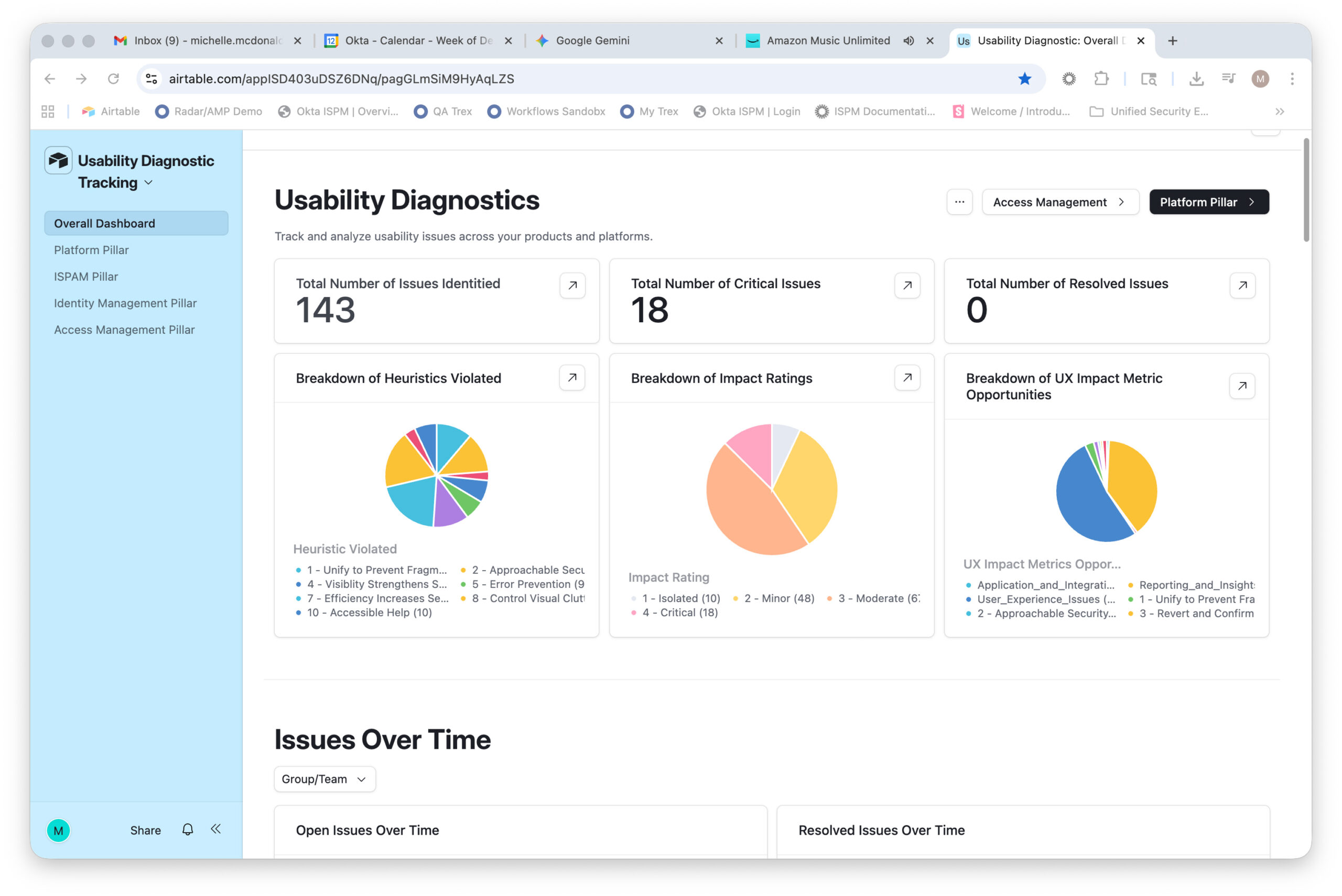
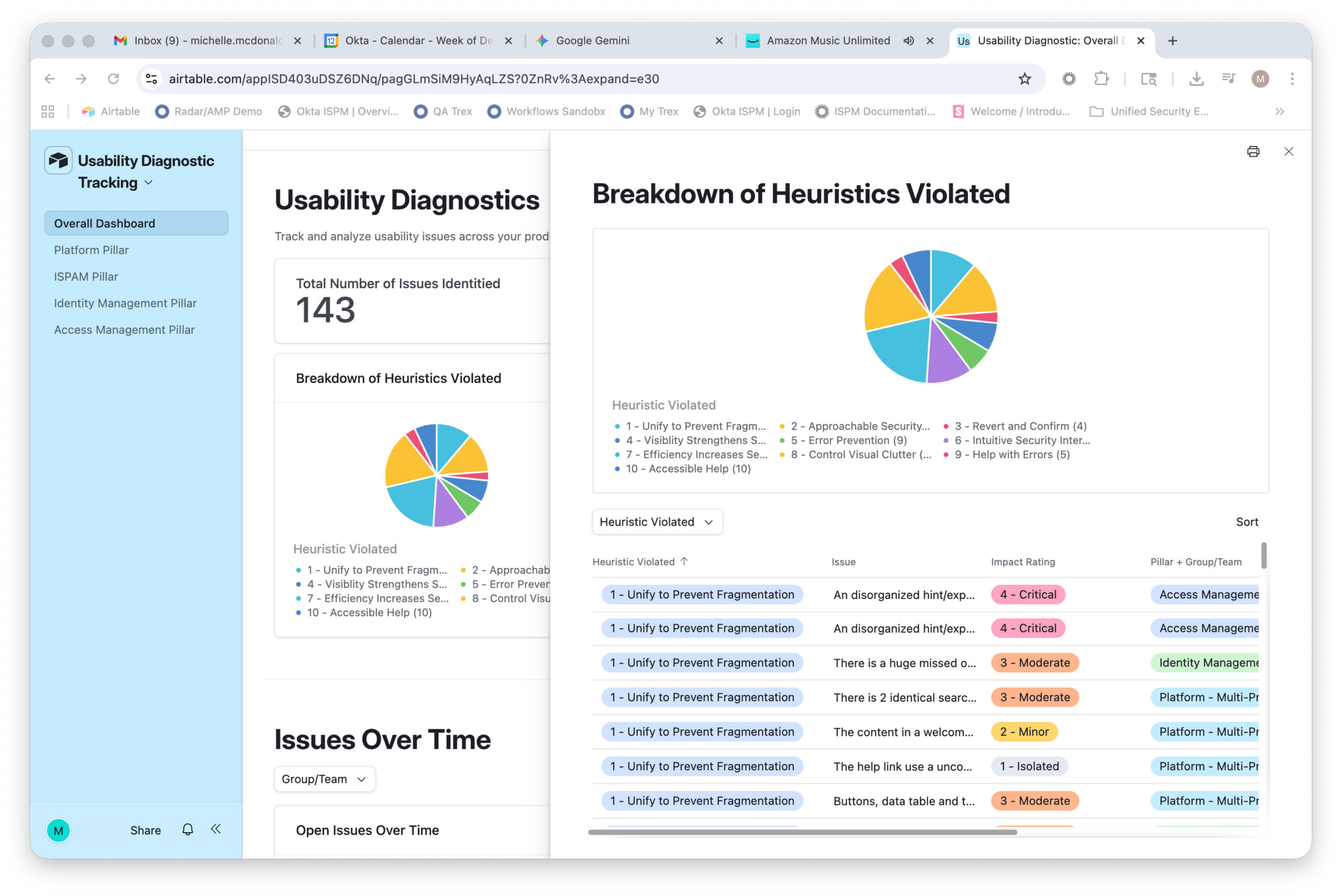
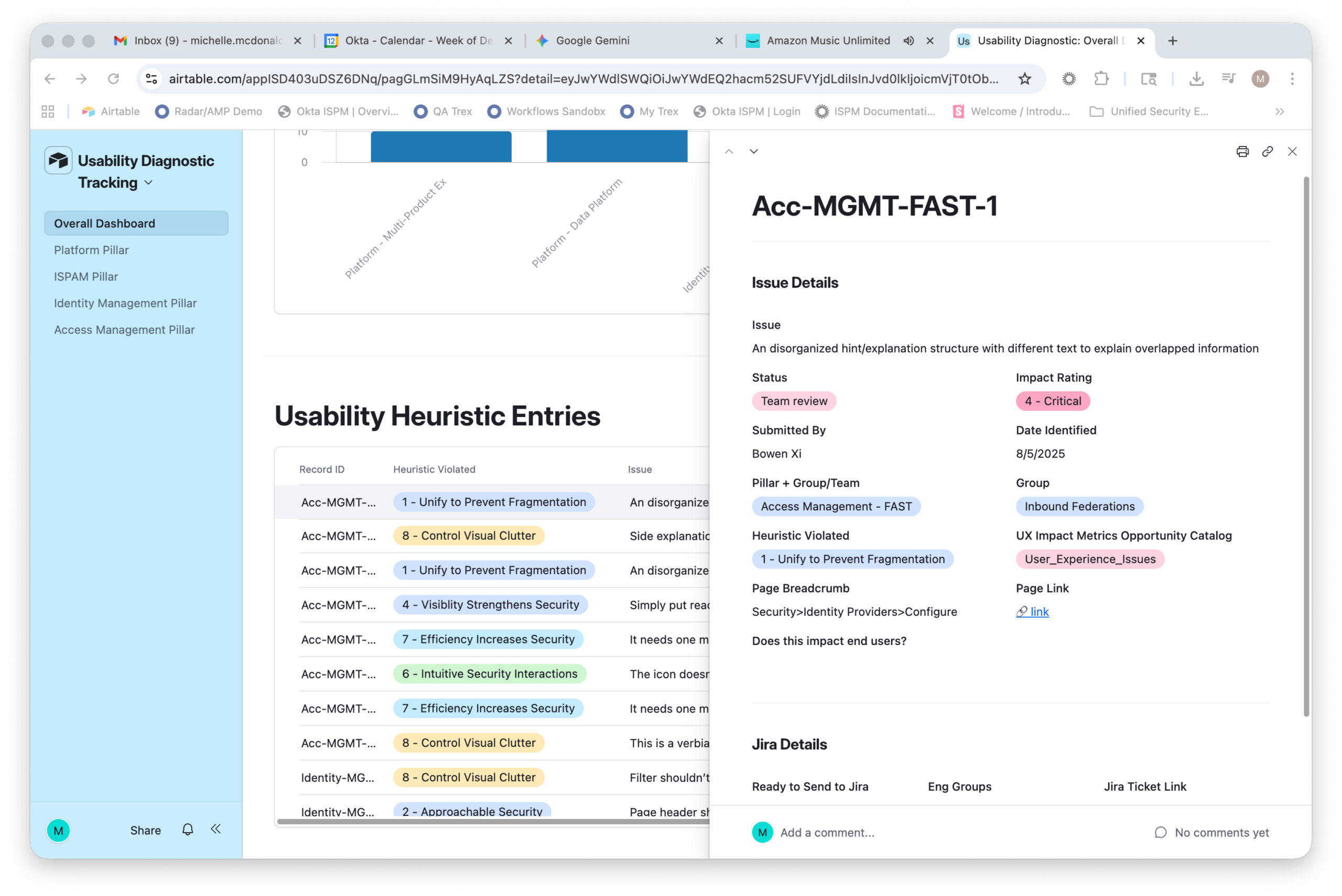
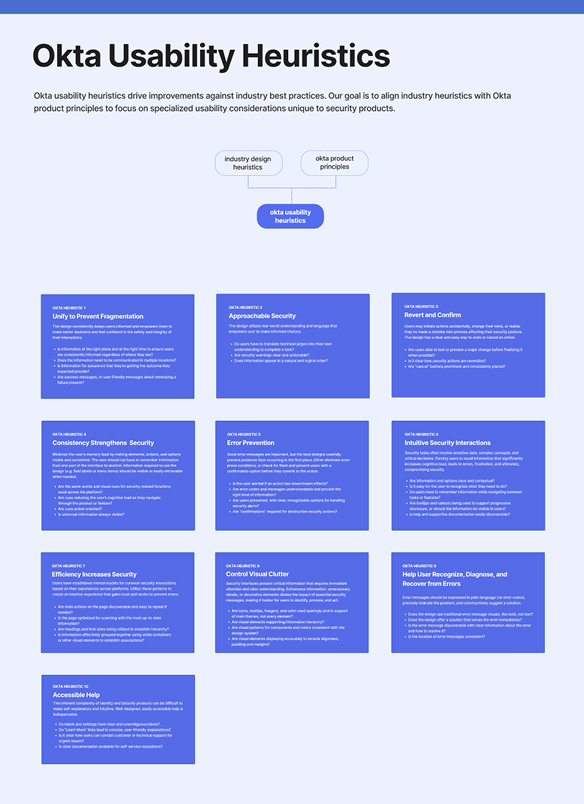
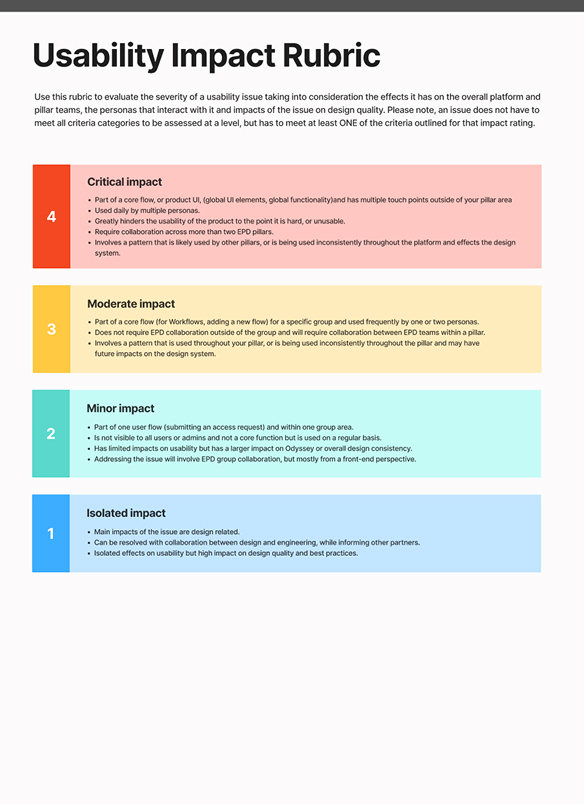
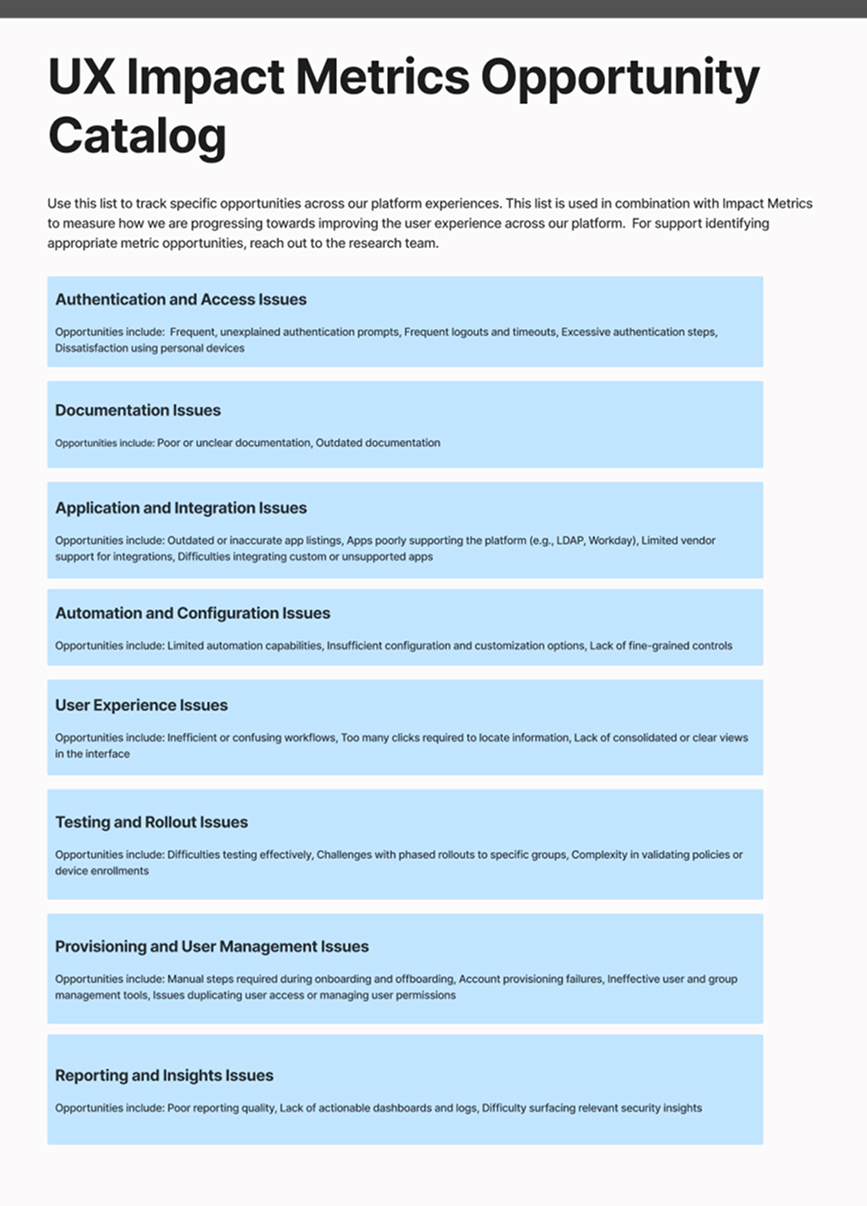
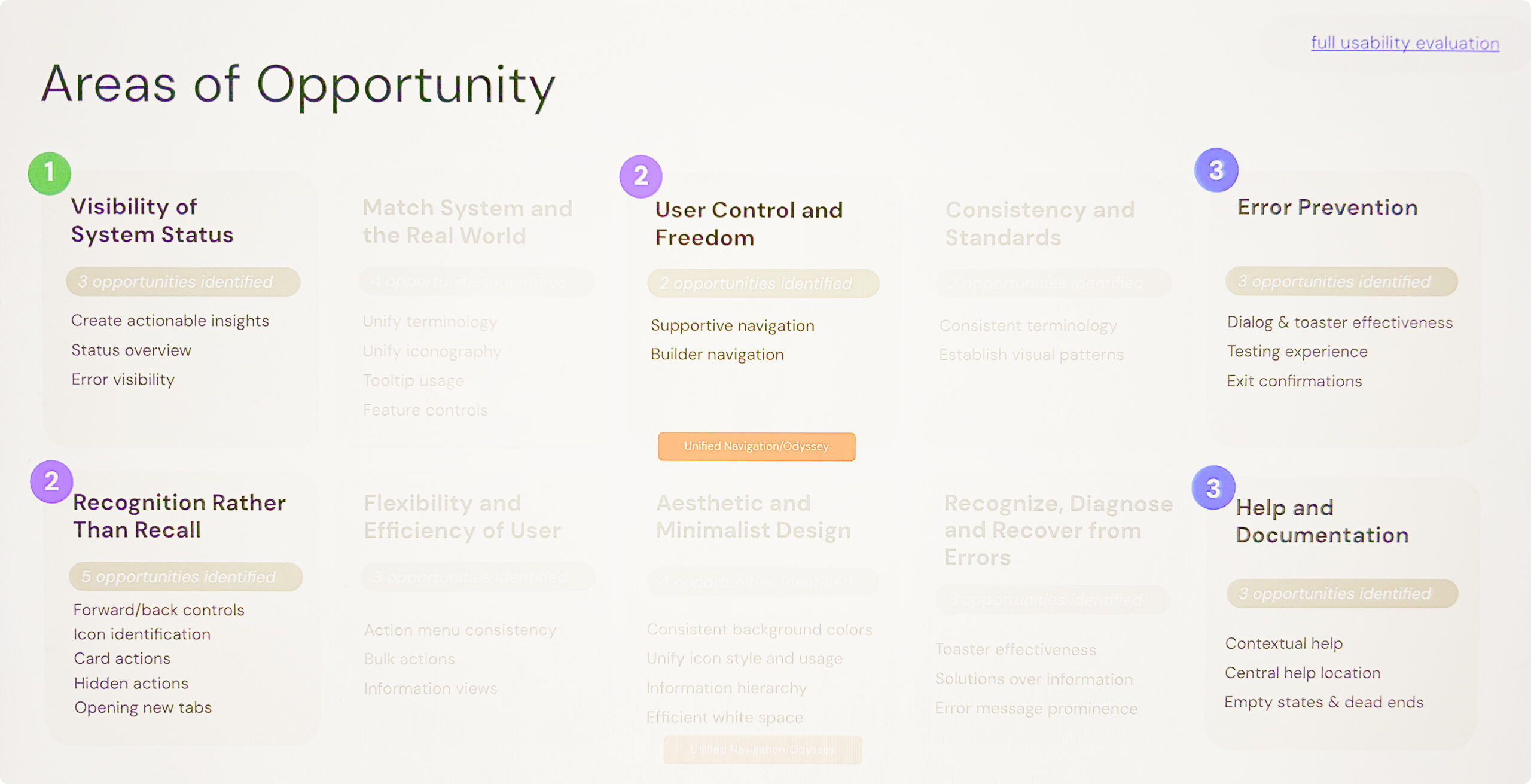
To remove subjectivity from product evaluations, I translated foundational HCI principles into a practical Usability Heuristic Matrix. This framework assigned clear severity weights to friction points based on user task frequency and system impact, converting vague interface complaints into clear, actionable priorities for the team.
Cross-Functional Adoption
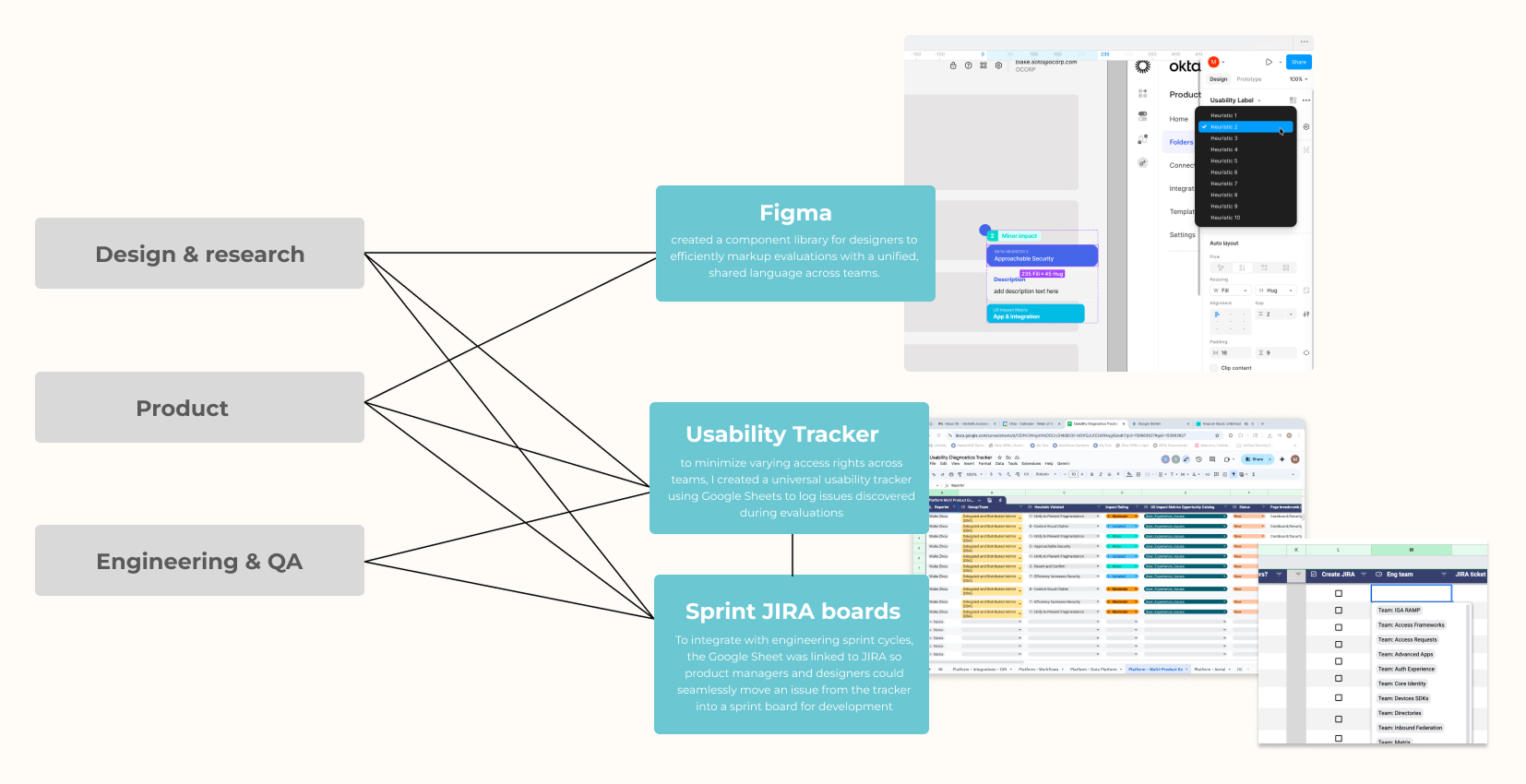
A quality standard is only effective if partners actually adopt it. I collaborated with Product and Engineering leadership to integrate this framework directly into our existing agile planning. By presenting design debt through a shared, objective lens, I empowered engineering leads to confidently allocate capacity to high-priority usability fixes alongside new feature delivery.
// 03. PRODUCT CRAFT
Deconstructing the No-Code Automation Interface to Lower Cognitive Load
Isolating Systemic Friction Violations
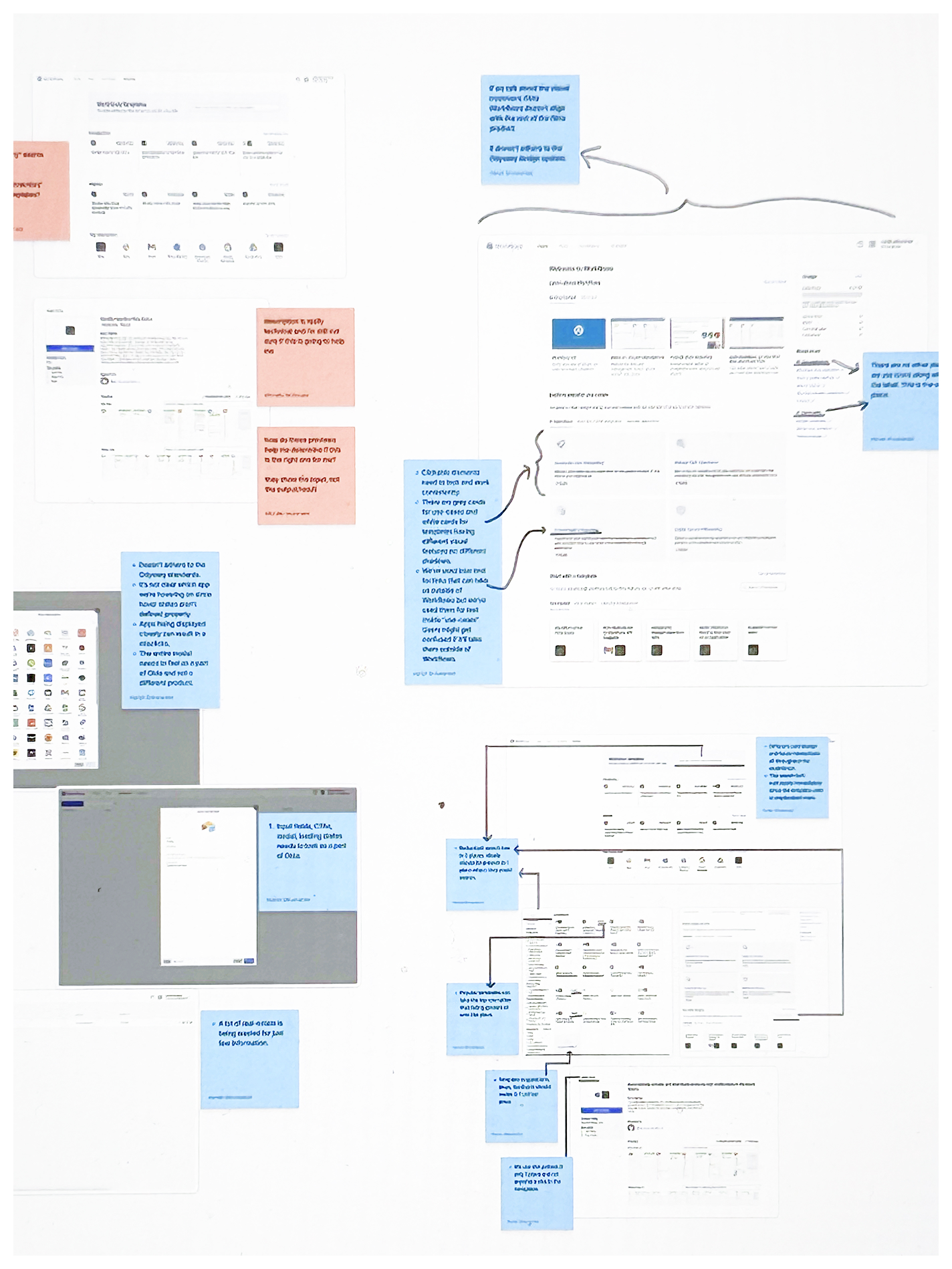
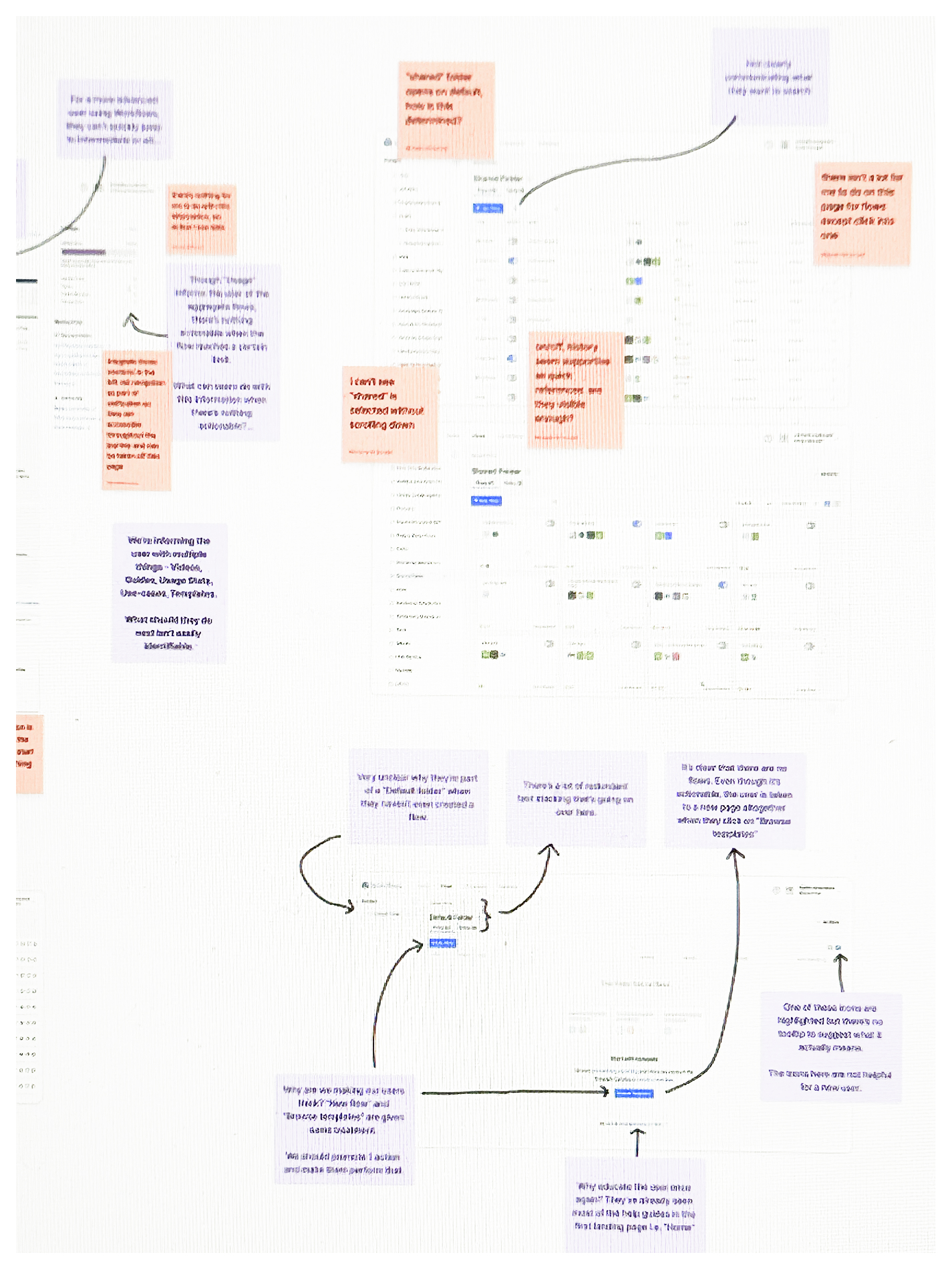
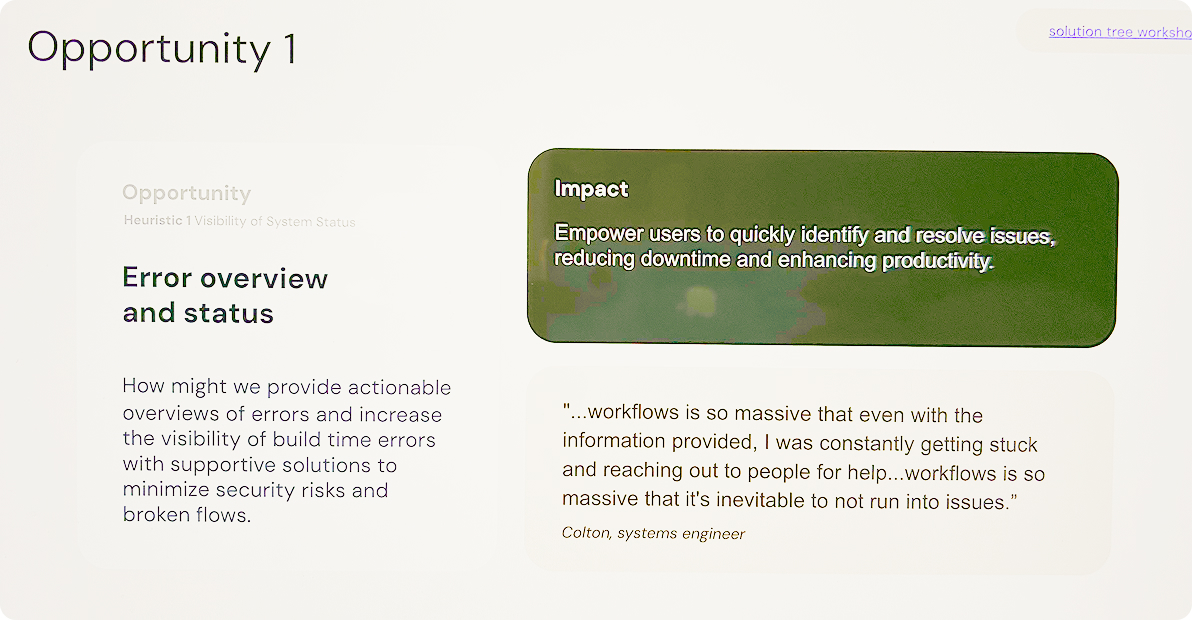
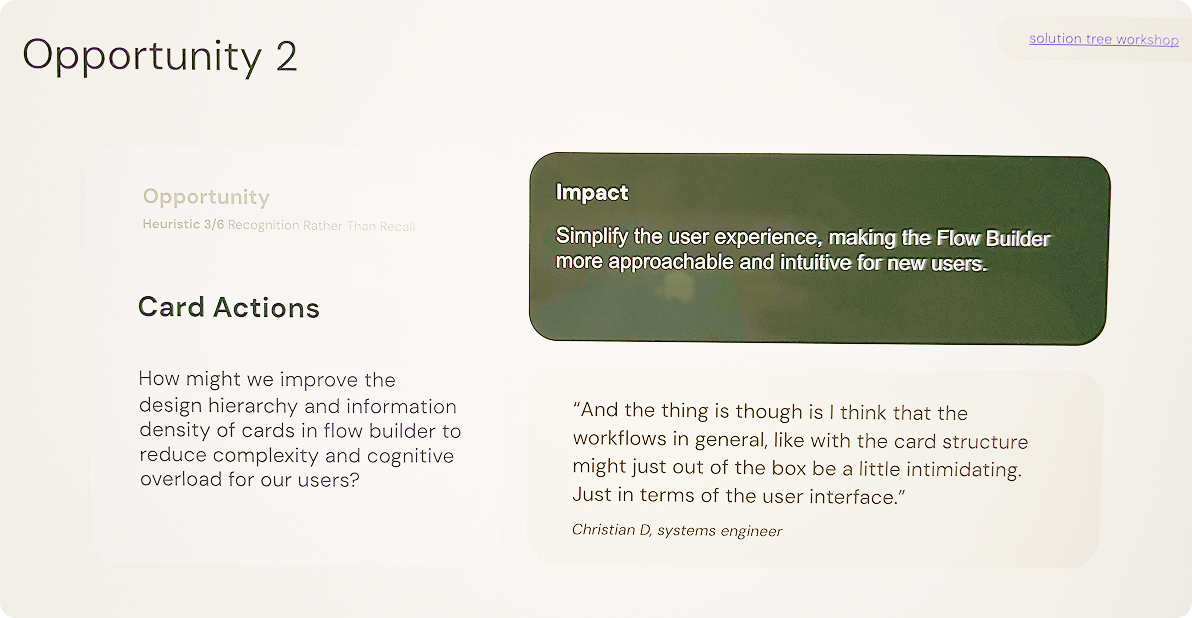
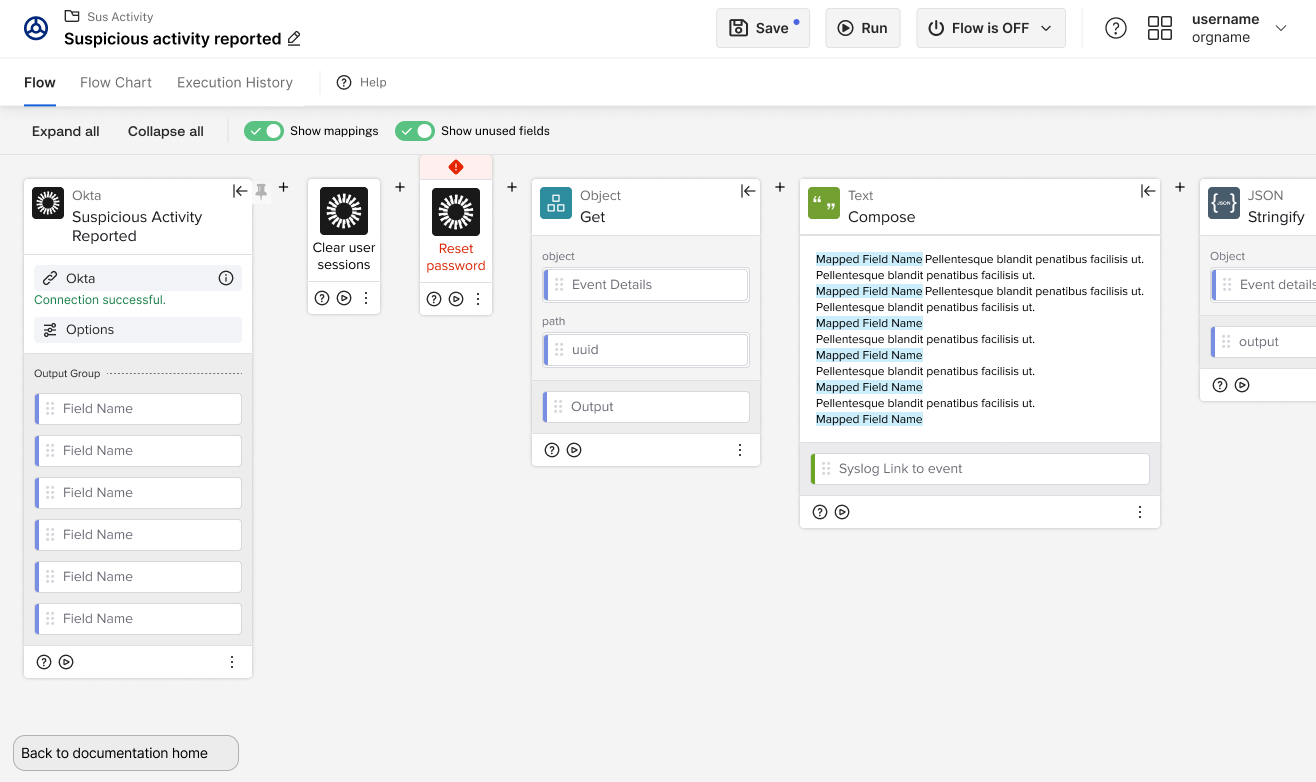
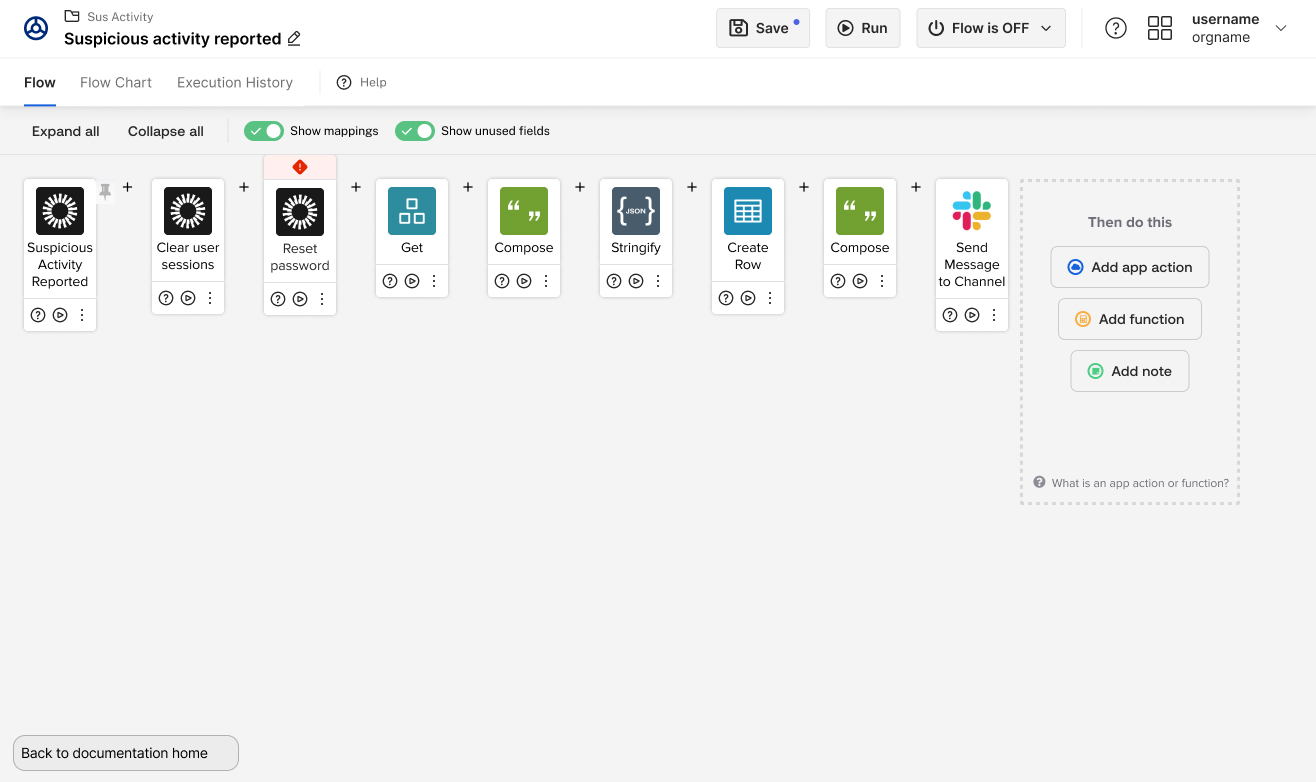
With the auditing framework validated, I executed a rigorous horizontal evaluation across the entire Okta Workflows canvas interface. I isolated a dense cluster of high-severity visual and architectural flaws—specifically targeting failures in system status visibility, incomplete user feedback loops, and severe recognition-versus-recall deficits that frequently triggered administrator configuration errors during active orchestration building.
Optimizing Complex Interaction Patterns
Working with the team's Senior Product Designers, we mapped the end-to-end optimized interface states for the core automation workspace to create persistent system-status indicators, designing contextual error prevention models, and establishing explicit visual hierarchies. The updated interaction patterns significantly minimized cognitive load for non-technical users while preserving the deep architectural power demanded by engineers.
// 04. LEADERSHIP & CONSTRAINT
Overcoming Roadmap Inertia to Address Systemic Product Debt
Navigating Cross-Functional Roadmap Trade-offs
The primary hurdle of introducing a design operations framework isn't technical; it's cultural. I navigated intense roadmap debates across independent product groups to secure adoption of our centralized quality matrix, advocating for the critical importance of platform usability health while balancing the engineering reality of compressed feature shipping deadlines and existing technical constraints.
To validate the operational value of the framework without stalling active product shipping pipelines, we made the strategic product choice to run a scoped initial rollout. We concentrated our initial audits and UI remediation exclusively on the highest-trafficked core automation execution hubs, intentionally deferring long-tail configuration panels to subsequent quarterly maintenance sprint cycles.